COMMUNITY RESOURCES
Practical guidance for communities seeking humane, effective solutions to community cat concerns.
Whether you are a resident, community cat caregiver, property administrator, or member of a neighborhood association, these resources can help you understand community cat management, address common concerns, and advocate for solutions based on prevention, education, and spay and neuter.
Use these guides to start informed conversations in your community and help others understand why humane population management works.
LIVING WITH COMMUNITY CATS
Practical Guides for Humane Community Cat Management
Understanding community cats is the first step toward managing them effectively and humanely.
Community cat concerns can create disagreements among neighbors, residents, caregivers, and property administrators. These guides explain why certain approaches work, why others often fail, and how communities can use spay and neuter, responsible management, and education to create long-term solutions.
Good decisions begin with good information.
GUIDE 2
Why Spay and Neuter Works
As we have seen, removing community cats does not address the cause of population growth. Spaying and neutering does: it stops reproduction and prevents new litters from being born.
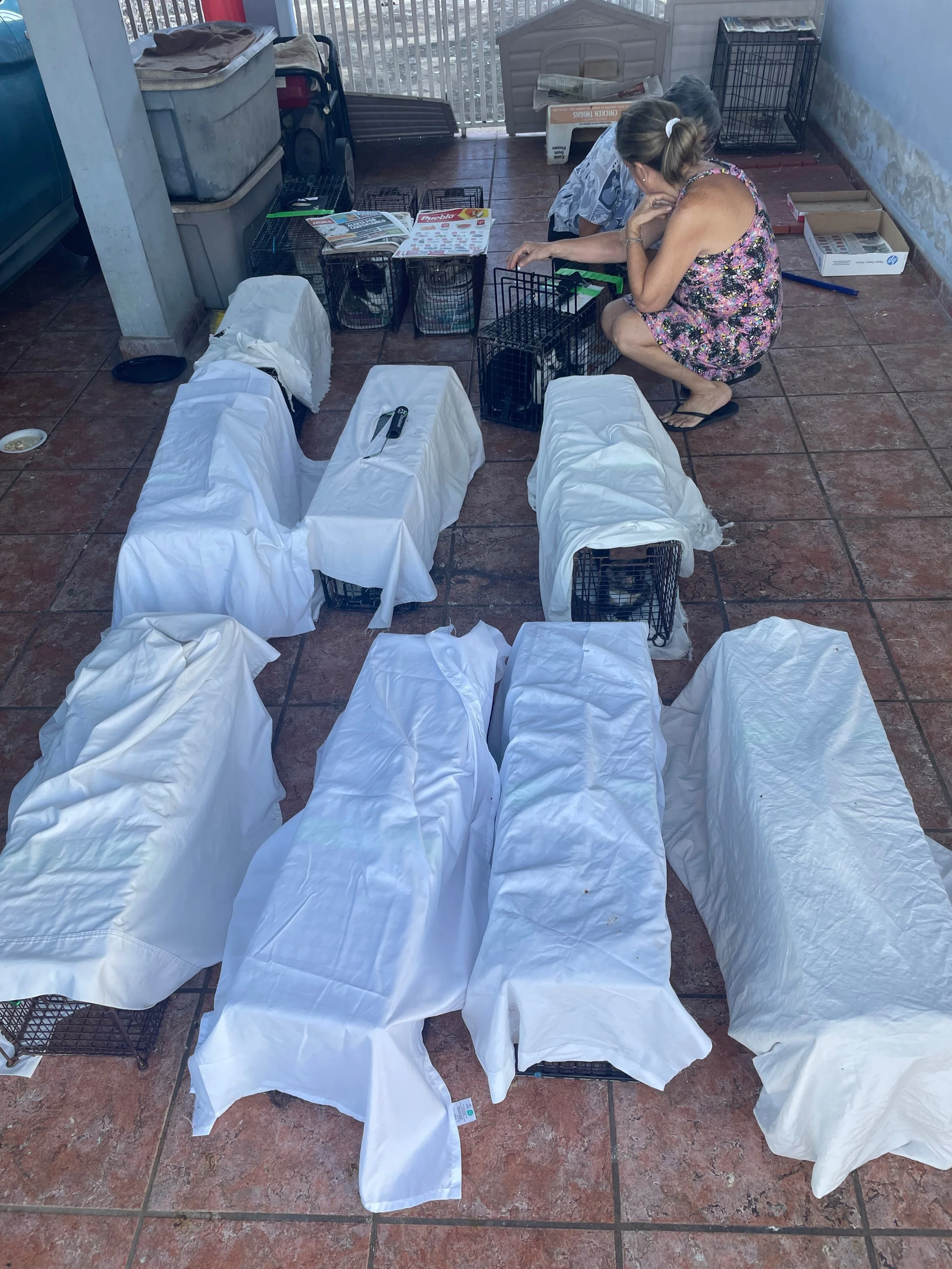
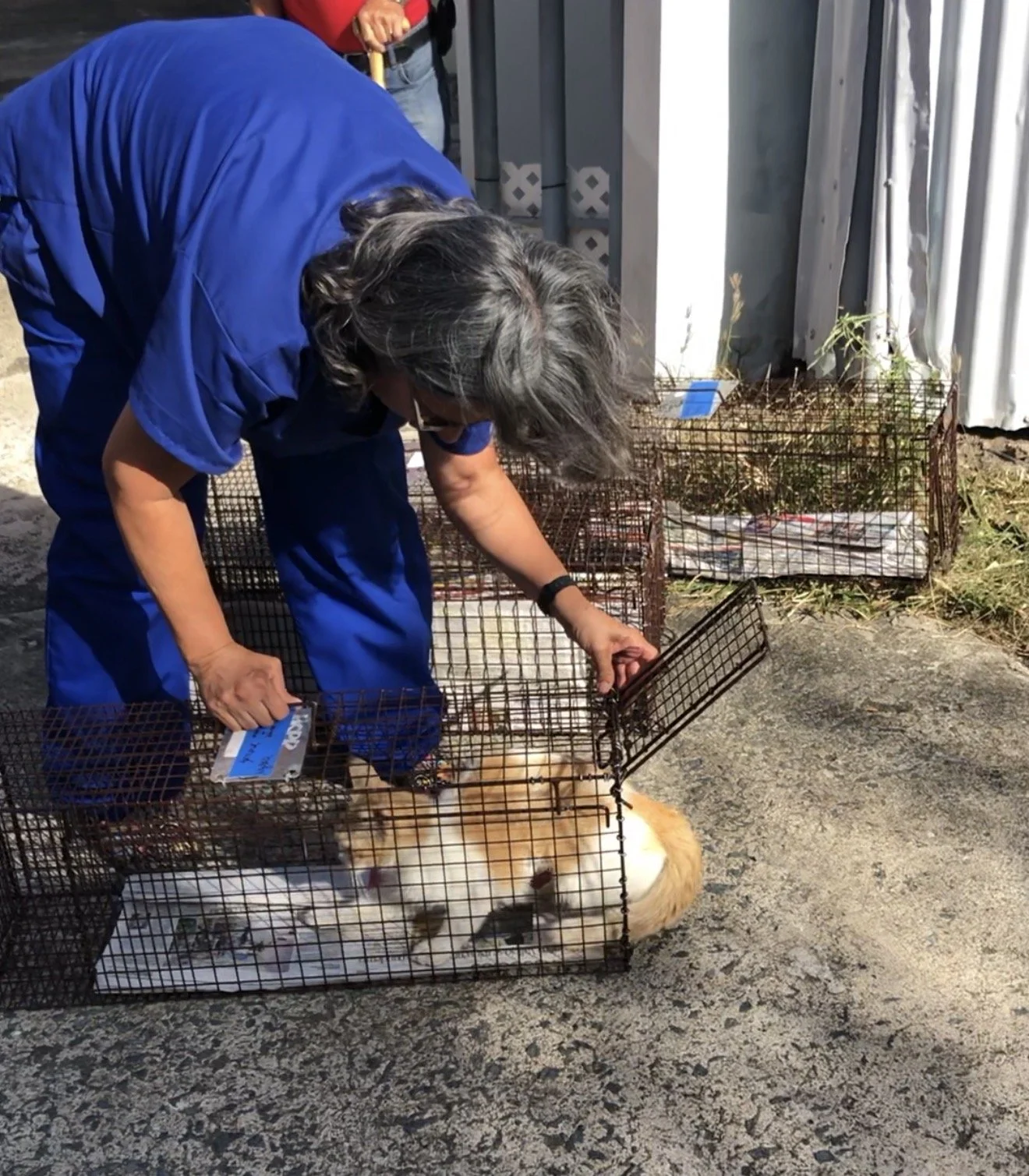
Through TNVR — Trap, Neuter, Vaccinate, and Return — community cats are humanely trapped, spayed or neutered, vaccinated, ear-tipped for identification, and returned to their outdoor homes.
Once sterilized, the cats can no longer reproduce. When a high percentage of the colony is sterilized and new, unsterilized cats are identified and addressed quickly, the population can gradually decline over time.
Spaying and neutering can also reduce behaviors associated with mating, such as roaming, fighting, yowling, and spraying.
VACCINATION IS PART OF RESPONSIBLE COLONY MANAGEMENT
TNVR also provides an important opportunity to vaccinate community cats. Vaccination helps protect individual cats from preventable diseases and contributes to healthier, better-managed colonies.
Including vaccination as part of TNVR supports both animal welfare and responsible community cat management.
The goal is not to move the problem somewhere else. It is to stop the cycle of reproduction and build healthier, more stable colonies.
GUIDE 3
Why Responsible Feeding Matters
Feeding community cats is often a source of disagreement, but responsible feeding can be part of effective colony management.
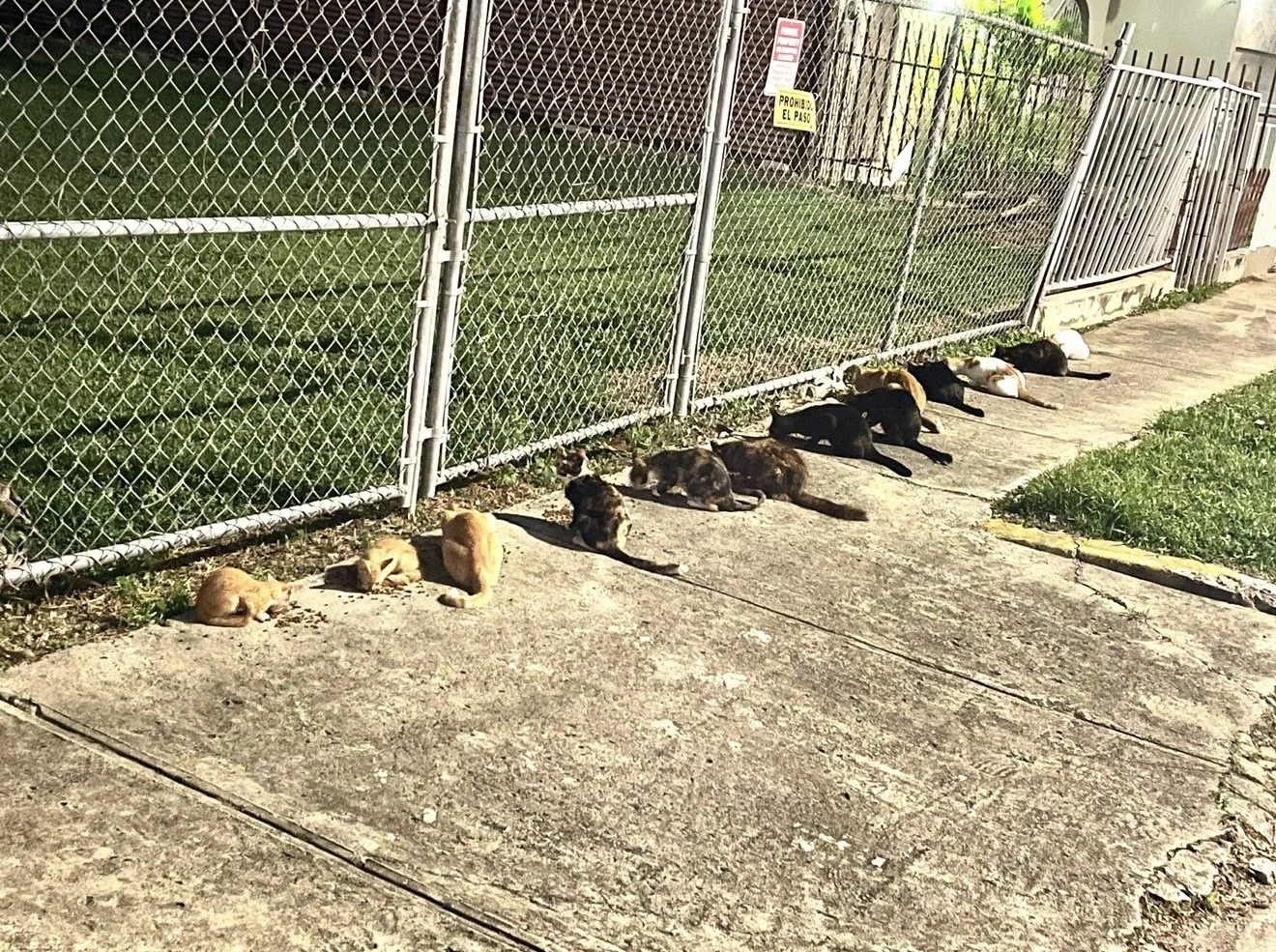
A managed feeding routine allows caregivers to monitor the cats, identify newcomers, notice injuries or illness, and recognize which cats still need to be sterilized.
Food should be provided at consistent times and in appropriate amounts. Feeding areas should be kept clean, and leftover food and containers should be removed to avoid attracting insects, wildlife, or creating unnecessary concerns for neighbors.
Most importantly, feeding should be combined with spay and neuter. Feeding alone does not control population growth.
Responsible feeding means feeding, monitoring, sterilizing, and keeping the area clean.
GUIDE 4
Common Myths About Community Cats
Misinformation can make community conflicts more difficult to solve. Understanding the facts helps communities make better decisions.
MYTH: Removing the cats will solve the problem.
Removing cats does not necessarily prevent other cats from eventually occupying the same area. Long-term management must address reproduction.
MYTH: Sterilizing only the females is enough.
Both males and females should be sterilized. Intact males can reproduce with multiple females and may travel between colonies.
MYTH: If cats are being fed, the population will automatically increase.
Food does not create kittens — reproduction does. A sterilized and responsibly managed colony cannot reproduce.
MYTH: An ear-tipped cat has been injured.
An ear tip is the internationally recognized visual indicator that a community cat has been sterilized through a TNVR program.
Good community decisions should be based on facts, not misconceptions.
GUIDE 5
Talking to Neighbors, Community Associations, and Property Management
Community cat issues can become emotional. Productive conversations are more likely when the focus remains on practical solutions rather than disagreements about whether someone likes or dislikes cats.
Begin with the shared concern: everyone wants fewer cats, fewer litters, fewer nuisance behaviors, and a cleaner, healthier community.
Explain that simply removing cats does not prevent reproduction in the surrounding population. A coordinated sterilization program addresses population growth while allowing the existing colony to be monitored.
Whenever possible, propose a simple management plan: identify the approximate number of cats, sterilize both males and females, establish responsible feeding practices, keep the area clean, and monitor for newcomers.
Documenting the colony and the number of cats sterilized can also help residents and administrators see progress over time.
The conversation does not have to be about choosing between people and cats. It can be about finding a responsible solution for the entire community.
GUIDE 6
How to Organize a Spay & Neuter Program in Your Community
A successful community cat program begins with organization.
1. Identify the colony.
Estimate how many cats are present and, when possible, take photos or video to help distinguish individual cats.
2. Identify which cats are already sterilized.
Look for an ear tip, the recognized visual indicator of a sterilized community cat.
3. Make a plan for the entire colony.
Sterilizing only a few cats — or only the females — leaves reproduction continuing within the colony.
4. Coordinate appointments before trapping.
Make sure veterinary appointments, transportation, traps, and recovery arrangements are organized in advance.
5. Trap safely and responsibly.
Community cats that cannot be handled should be transported in appropriate humane traps.
6. Return the cats to their territory.
TNVR includes returning community cats to the location where they were living after appropriate recovery.
7. Continue monitoring.
Keep track of the colony and act quickly when an unsterilized newcomer appears.
The most effective program is not the one that sterilizes a few cats. It is the one that works toward sterilizing the entire colony.
GUIDE 7
What to Do When a New Cat Appears
A new cat does not necessarily mean that a managed colony is failing. Cats may arrive from surrounding areas, become lost, or unfortunately be abandoned.
The important thing is to notice newcomers early.
First, check for an ear tip. If the cat is already ear-tipped, it has likely been sterilized through a community cat program.
If there is no ear tip, determine whether the cat is friendly or unsocialized and whether someone in the area recognizes it. A friendly cat may be a lost or abandoned pet.
If the cat appears to be an unsterilized community cat, arrange for spay or neuter as soon as possible before reproduction occurs.
Regular monitoring makes this much easier. A caregiver who knows the colony can quickly recognize when a new animal appears.
One new unsterilized cat can restart reproduction. Early action protects the progress already made.
GUIDE 8
How Does a Community Cat Colony Actually Decrease?
A managed colony does not disappear overnight.
Population reduction happens gradually when reproduction is stopped and the colony is consistently monitored.
When both males and females are sterilized, no new kittens are born within the sterilized population. Over time, natural changes reduce the number of cats in the colony.
For this approach to remain effective, newcomers must be identified and sterilized before they reproduce. This is why monitoring is an essential part of long-term colony management.
Progress should be measured over time — not by whether every cat disappears immediately, but by whether births stop and the number of cats gradually decreases.
Stop the births. Monitor the colony. Maintain the progress.
GUIDE 9
What Does Puerto Rico Law Say?
Puerto Rico’s Animal Welfare and Protection Act, Law 154-2008, as amended, establishes protections against animal abandonment, neglect, abuse, poisoning, and other forms of mistreatment.
The law recognizes animals without a known guardian and provides protections that are relevant when conflicts involving community cats arise. Its provisions apply to conduct that causes animals injury or unnecessary suffering.
ABANDONMENT IS A CRIME
Law 154 makes it a crime to intentionally, knowingly, carelessly, or through criminal negligence leave an animal in a place with the intention of abandoning it. Under the current law, animal abandonment is classified as a felony.
ANIMAL ABUSE IS A CRIME
Causing physical injury or suffering to an animal intentionally, knowingly, carelessly, or through criminal negligence constitutes animal abuse. More severe conduct resulting in serious physical injury or death carries more serious criminal penalties.
POISONING ANIMALS CAN BE A CRIME
Law 154 specifically addresses poisoning. Importantly for community conflicts, the law states that it is not a defense that the animal entered someone’s property. Intentional poisoning that causes severe injury or death can constitute a felony.
TRAPPING MUST NOT CAUSE UNNECESSARY INJURY OR SUFFERING
The law also regulates the use of traps or devices used to capture animals. Using a trap without taking the necessary measures to prevent injury or unnecessary suffering can constitute a crime, with more serious consequences when the trap causes severe injury or death.
KILLING AN ANIMAL IS NOT SOMETHING A PRIVATE PERSON MAY SIMPLY DECIDE TO DO
Law 154 regulates euthanasia and generally requires that it be performed by a veterinarian or properly trained personnel under veterinary supervision using approved methods. The law also provides penalties for unauthorized killing of an animal, subject to the specific emergency provisions contained in the statute.
Community disagreements do not justify cruelty. Whatever solution a community pursues, animals must be treated humanely and in accordance with Puerto Rico law.
This information is provided for general educational purposes and is not legal advice. For the complete and current text of Law 154-2008, as amended, consult the Government of Puerto Rico.
Official text of Law 154-2008, as amended — Government of Puerto Rico
GUIDE 1
Why Removing Community Cats Doesn't Solve the Problem
Removing community cats may seem like a quick solution, but simply taking cats away does not address the conditions that allowed them to live there in the first place.
When cats are removed from an area where food, shelter, and other resources are still available, new cats may eventually move into the same territory. Cats from surrounding areas may enter, and abandoned or unsterilized cats can also become part of the population.
This is commonly known as the Vacuum Effect.
The result can be a repeating cycle: cats are removed, other cats arrive, reproduction continues, and the community faces the same problem again.
WHAT IS THE VACUUM EFFECT?
The Vacuum Effect occurs when cats are removed from an area but the conditions that attracted and supported them remain.
Removing the cats creates available territory. Over time, other cats may move into the area to take advantage of the same resources. If those cats are not spayed or neutered, reproduction begins again and the population can grow.
This is why removing cats alone is not a long-term population management strategy.
Removing the cats does not remove the conditions that brought cats there.